




Mobile App, PWA or Mobile Website? How Brisbane Businesses Can Choose the Right Digital Experience

15 October 2026

Mobile app, PWA or mobile website?

For a Brisbane business considering its next digital investment, the strongest decision usually starts somewhere other than the technology. Start with the job the customer needs done.


Someone discovering your business for the first time has very different needs from an existing client, patient, owner, member or customer who returns regularly to book, access information, submit a request or manage an account.


That distinction matters because a responsive mobile website, Progressive Web App (PWA) and dedicated business app can each play different roles.

The commercial value is not in selecting the most sophisticated platform. It comes from choosing a digital experience that makes an important customer or operational interaction easier, clearer or more useful.


For businesses exploring mobile app development in Brisbane, that means understanding the use case before building the feature list. That may look different for a dental practice in Morningside, a professional service in Teneriffe, a body corporate management company serving apartment communities around Bulimba and Hawthorne, or a trade business operating across wider Brisbane.

Why does the format matter?

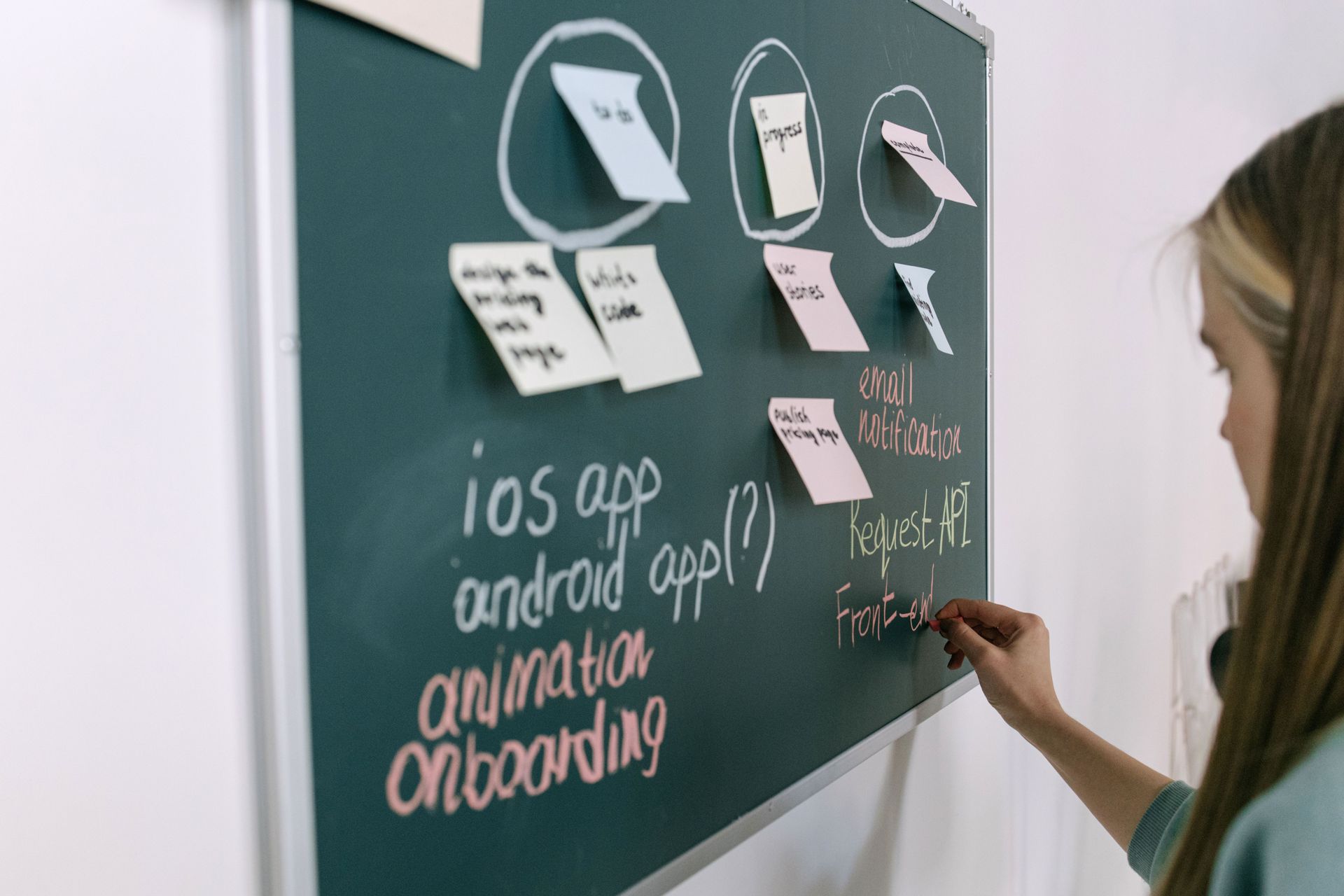
PFH writing app strategy on a green chalkboard with app icons and notes about iOS, Android, and app onboarding.

Businesses often reach this decision after a period of growth. Services change. Customer expectations move. New systems are introduced. Temporary workarounds become permanent. Nothing may be dramatically broken, but the digital experience gradually becomes less aligned with how the business now operates. An established Brisbane service business may already have a capable website and strong referral network but discover that existing clients or customers need something different after that first interaction.

They may repeatedly need to:

  • make appointments
  • submit service requests
  • retrieve documents
  • manage memberships
  • access client information
  • receive job updates
  • upload forms or photographs
  • receive important notifications


That recurring behaviour is often a much stronger signal for app investment than simply wanting to “have an app.”

The goal is not to introduce more technology. It is to decide which digital format best supports the behaviour that already matters.

What is a mobile website?

A mobile website is a website designed responsively so that its layout and functionality adapt to smaller screens such as smartphones and tablets. For many businesses, this remains the most important mobile experience. A responsive website can be particularly effective when the main customer need is:

  • Discovering the business
  • Understanding services
  • Reading information
  • Comparing options
  • Finding contact details
  • Making an initial enquiry
  • Completing relatively straightforward bookings or transactions

The significant advantage is accessibility. Customers can arrive through search, referrals, social media, Google Business Profile or a direct link without installing another platform. For a Brisbane accounting practice, law firm or healthcare provider, a strong mobile website may already support most of the early customer journey. If the real issue is that the current mobile experience is unclear, difficult to navigate or outdated, improving the website may deliver more value than introducing a new app.

 Needing a better mobile experience does not automatically mean needing a mobile app. Sometimes the website simply needs to work better.

What is a Progressive Web App (PWA)?

A Progressive Web App, or PWA, is a web-based experience designed to behave more like an application. It is accessed through web technology rather than being built solely around a traditional app-store model. Depending on the browser, device and implementation, a PWA can offer capabilities such as home-screen installation, some offline functionality and more app-like interactions. That can make a PWA useful where a business wants a focused mobile experience but does not necessarily require all the capabilities or distribution model of a dedicated mobile app.

Possible use cases may include:

  • Client portals
  • Booking tools
  • Field workflows
  • Repeat-access resources
  • Member information
  • Internal processes
  • Simpler transactional experience


For example, a professional practice may want clients to access recurring information without requiring a traditional app download.

A trade or field-service business may need a mobile-friendly workflow that staff can access easily from different locations. PWA capabilities are not identical across every browser or device, so the decision should be based on the actual functionality required. A PWA should not be treated as automatically better, simpler or more appropriate than a dedicated app.

When does a dedicated business app make sense?

A dedicated business app becomes more compelling when people have a meaningful reason to return regularly. That might include:

  • Appointment management
  • Membership interaction
  • Service requests
  • Customer account access
  • Documents or resources
  • Repeat ordering
  • Operational workflows
  • Timely notifications
  • Relevant device functionality

A dental practice may use an app to support appointment access and patient information. A Community Corporation may use one for documents, notices, maintenance requests and owner or committee communication. A property business may use an app to support recurring client interaction or access to information. An established trade business may benefit from service requests, photo uploads and job communication. In these situations, App Design & Creation can provide a dedicated environment for ongoing interaction.


But a long list of possible features does not automatically justify the investment. The more important question is whether customers, clients or staff will use those functions regularly enough for the dedicated experience to earn its place.

Mobile app, PWA or mobile website: what should a Brisbane business compare?

Local Dentist in navy scrubs holding a clipboard beside a dental chair and treatment equipment deciding on app strategy

Rather than starting with a feature wishlist, compare the options against the actual customer journey.

Frequency of use: How often will the customer return after the first interaction? If use is occasional and primarily informational, the mobile website may remain the strongest format. If interaction is frequent and recurring, a PWA or app becomes more relevant.


Discovery: Does the business depend heavily on people finding it through search? Web content remains particularly important for discovery and search visibility. A dedicated app should therefore be considered within the wider digital ecosystem rather than automatically replacing the website.


Installation friction: Downloading an app asks more of the user than opening a webpage. That additional commitment needs to be justified by ongoing value. If customers have little reason to return, asking them to install an app may introduce more friction than benefit.


Device functionality: Does the experience genuinely require capabilities associated with the user's device? The answer should be based on the actual use case rather than a desire to include technology simply because it is available.


Notifications: Would timely notifications genuinely help the customer? Appointment reminders, service updates or important member alerts can have a clear purpose. Sending more marketing messages simply because push notifications are available is not a strong app strategy.


Offline or limited-connectivity use: Does the customer or team need to access information or complete parts of a process when connectivity is unreliable? If so, that may influence the technical approach.


Maintenance and ongoing ownership: Every additional digital platform creates something that needs to be maintained. Content changes. Platforms evolve. Operating systems and browser capabilities change. Customer expectations change. The initial build is therefore only one part of the decision.


Start with the repeat customer task: One of the most useful filters in app strategy is simple: What will people come back to do?

Consider a service business. Customers repeatedly:

  1. make a booking,
  2. retrieve information,
  3. submit documents, and
  4. receive updates.


That repeated pattern provides a much clearer case for a dedicated digital experience than: “Our competitors have apps.” The same thinking applies to internal business applications. If staff repeatedly move between spreadsheets, messages, documents and disconnected systems to complete one common process, a digital application may help consolidate that workflow. But again, the format follows the problem.


A PWA may be sufficient.

A dedicated mobile app may be stronger.

Or improving the existing website may solve most of the issue without adding another platform.

What is the smallest useful first version?

Once there is a credible use case, another useful question is: What is the smallest version that would deliver real value?

This is often described as a Minimum Viable Product, or MVP. An MVP does not mean releasing something unfinished or poor quality. It means identifying the core functionality required to solve the primary problem before investing in a much larger feature set.

For example, the initial version might centre around: customer login + bookings + notifications rather than immediately adding loyalty, chat, payments, events, social feeds and every other possible feature. A focused first version gives the business something much clearer to assess.

  • Are customers using it?
  • Does it actually make the experience easier?
  • Which functionality matters?
  • What deserves to be developed next?

This reduces the temptation to invest heavily in features based largely on assumptions.

Where does local visibility fit?

For Brisbane businesses, app strategy should still sit within the broader digital visibility strategy. A customer might first discover the business through:

  • Google Search
  • local search
  • Google Business Profile
  • a referral
  • social media
  • educational content

The website may remain the strongest environment for that first stage. The app or PWA can then play a different role once the relationship becomes ongoing. This is why a digital ecosystem can be more useful than thinking in terms of one platform replacing another.

A Brisbane business may use:

SEO and content for discovery → website for education and enquiry → app for repeat interaction.

Another business may need nothing beyond a strong mobile website. Local SEO should also remain grounded in genuine location relevance.

Using the phrase mobile app development Brisbane does not mean repeatedly adding “Brisbane” to paragraphs where the location changes nothing.

The location should help clarify the market, service area or customer context. That is how local visibility remains useful rather than decorative.

How should businesses make the final decision?

Person in a white shirt sits by calm water, looking at a phone at sunset reflecting on app strategy decision

A good decision sits at the intersection of three things:

What the customer needs

What the business needs

What the technology can appropriately support

When those areas overlap, the case for investment becomes much clearer. This is where Find Your Pulse can help establish direction before implementation begins. The outcome may point toward a website improvement, a PWA, Mobile App Design, another digital solution or a phased combination. The important part is deciding from evidence and business needs rather than starting from the platform.

Supporting the experience after launch

Whatever format is chosen, the digital experience will need to evolve. Customers provide feedback. Usage patterns become clearer. Business processes change. Technology changes. That is where ongoing review matters. Through Digital Momentum Care, the wider digital ecosystem can continue to be maintained and refined as the business develops. The goal is not constant feature development. It is keeping the digital experience useful and aligned with the business.

Choosing the Right Digital Experience

For Brisbane businesses considering a mobile app, PWA or improved mobile website, the best starting point is not:

What can we build?

Start with:

What will people come back to do?

Then consider how often they will do it, what functionality genuinely matters, how much friction they will accept and what the business can realistically maintain.

Sometimes the answer will be a dedicated app.

Sometimes a PWA.

Sometimes a better mobile website.

The strongest digital strategy is not the one with the most technology.

It is the one where the technology has a clear job.

If you're considering mobile app development in Brisbane and want to understand which approach fits your business, Book a Discovery Call.

Share this article:

Recent Posts

Brisbane City skyline at dusk with illuminated bridge over a river and reflections on the water
by Carman Adams • 23 October 2026
A practical guide to local SEO for Brisbane businesses, covering Google Business Profile, service pages, reviews, technical checks and useful measurement.

Team meeting around a table, with one person shaking hands and others working on laptops and notes.
by Carman Adams • 22 October 2026
A recommendation can introduce your business. Your website should help referred prospects understand the fit and feel clear about taking the next step.

Professional hands using a smartphone beside a laptop on a desk with a coffee mug and notebook.
by Carman Adams • 13 October 2026
Before building an app, start with the repeat customer need. Learn why the strongest app ideas begin with what people will come back to do.

Business owner in the real café environment, no laptop
by Carman Adams • 6 October 2026
Has your business outgrown its website? Learn the signs established Brisbane businesses should review before deciding whether to redesign or rebuild.

Digital Momentum Care strategy for Brisbane businesses showing growth and evolution.
by Carman Adams • 5 October 2026
Learn how Digital Momentum Care helps Brisbane small businesses maintain growth, evolve their websites, and stay competitive long after their initial launch.
Mobile Apps for Local Businesses Wynnum Guide
by Carman Adams • 2 October 2026
Learn how mobile apps for local businesses in Wynnum drive customer loyalty and engagement. A practical guide to reaching customers on the go.
Website plans and digital strategy before deciding how to approach a website rebuild.
by Carman Adams • 1 October 2026
Planning a website rebuild? Review five key areas first to make sure your new website reflects where your Brisbane business is heading.

Professional website design for Bulimba businesses concept showing a modern digital workspace.
by Carman Adams • 30 September 2026
Discover how professional website design for Bulimba businesses helps small brands stand out in Brisbane's competitive market through local SEO and evolving digital strategy.

Strategic digital foundation for Brisbane businesses in 2026.
by Carman Adams • 28 September 2026
Discover why a strategic digital foundation is essential for Brisbane businesses in 2026. Learn how to build a website that evolves with your growth through SEO, AI content, and continuous support.

Digital Momentum Care for local Wynnum business growth and online presence.
by Carman Adams • 25 September 2026
Learn how Digital Momentum Care keeps Wynnum businesses competitive. Discover why your website needs ongoing support, SEO, and strategic evolution to succeed in the Brisbane Bayside market.
Show More