

From Idea to App Store: How Brisbane Businesses Can Leverage Mobile Apps for Growth
Mobile apps can support business growth when they solve a genuine customer or operational problem. For Brisbane businesses, that might mean making repeat bookings easier, improving customer communication, simplifying loyalty programs, providing secure access to information or streamlining an internal process.
The opportunity is not simply to “have an app.” It is to create a useful digital tool that earns a place in the customer’s or team member’s routine and can evolve as the business grows.
At Pulse & Flow Haus, we see an app as a business asset rather than a piece of technology in isolation.
The starting point is always the same:
What problem are we trying to solve, who will use the app, and why is an app the right solution?
Why should my Brisbane business consider a mobile app?
For many small to medium-sized business owners in Brisbane, the initial reaction to the idea of a mobile app is often, "Isn't that just for big corporations?" The reality in 2026 is quite the opposite. Small businesses are uniquely positioned to benefit from mobile technology because they can offer a level of personalisation that larger competitors often miss. A mobile app allows you to bypass the noise of social media algorithms and the crowded space of search engine results, giving you a direct line to your most loyal patrons.
For many small and medium-sized business owners, an app can still feel like something designed mainly for large companies.
In reality, the value of an app depends less on the size of the business and more on how often customers or staff need to interact with it.
A mobile app may be worth exploring when people repeatedly need to:
- make bookings or reservations
- access member or customer information
- receive timely updates
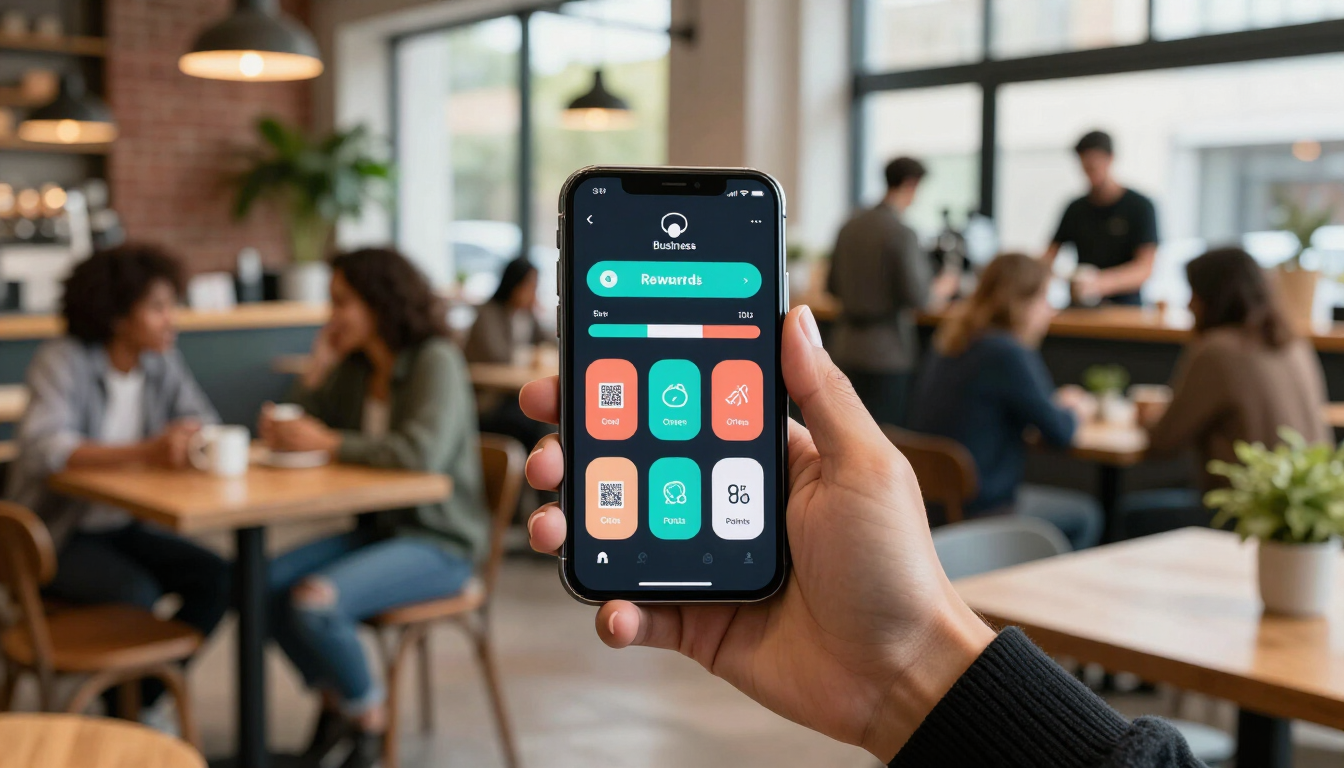
- use loyalty or rewards features
- upload photos, documents or forms
- access resources or account information
- communicate with the business
- complete recurring internal tasks
For a busy local business in Bulimba or elsewhere in Brisbane, this can create a more direct and convenient digital experience.
Push notifications, for example, can provide a direct communication channel when users have chosen to receive them.
Loyalty features can make repeat interactions easier.
Smartphone capabilities such as cameras, location services or secure login can also support useful app functions where they genuinely improve the experience.
Not every business needs these features, and not every app needs to use native phone capabilities.
The more important question is:
What would an app allow your customer, staff member or stakeholder to do more easily than they can today?
If there is no clear answer, improving your website or another part of your digital presence may be the better investment.

Maximising Customer Engagement with Mobile Apps for Growth
A website and an app often play different roles in the customer journey. A well-planned Website Design can help people discover your business, understand your services and decide whether you are the right fit. An app can become more valuable once the relationship is recurring. A customer might regularly use an app to make a booking, check information, access a loyalty program, receive an update or communicate with the business.
For an internal team, the app might support document access, field updates, job information or another repeated workflow. This is where strategy becomes important. During a Digital Foundation Engagement, the focus should be on identifying the real point of friction before deciding which technology solves it.
Are customers abandoning a complicated booking process?
Do they repeatedly call for information that could be available securely through an app?
Does your team spend time moving information between disconnected systems?
Would regular push communication genuinely add value?
An app may help with some of these issues, but the solution should follow the problem rather than the other way around.
Where appropriate analytics are available and privacy obligations are addressed, app usage data can also help a business understand which features people use, where they encounter difficulty and what may deserve refinement. That creates an opportunity to improve the experience based on evidence rather than assumptions.
For a Brisbane business with loyal repeat customers, that ongoing relationship can be one of the strongest reasons to consider an app.
How do we navigate the journey from concept to App Store?
Moving from an idea to a published app becomes much clearer when the business case is defined first. The process typically begins with the “why.”
Who is the app for?
What problem will it solve?
How often will someone use it?
What does the app need to do well from the beginning, and what could wait until later?
From there, the project can move through a more structured process.
- Strategy and Discovery: Map the user journey, clarify the business objective and define the priority features. Where appropriate, this may include identifying a Minimum Viable Product so the first version focuses on what matters most.
- UX/UI Design: Structure the app so users can understand where they are, what they can do and how to complete important tasks without unnecessary friction.
- Build and Testing: Develop the required functions and test the experience across relevant devices and use cases. The goal is to identify and resolve issues before launch, while recognising that ongoing monitoring remains important after release.
- App Store Preparation and Submission: Prepare the app for the requirements of the Apple App Store and Google Play. Approval remains subject to the relevant platform’s policies and review process.
- Launch, Measurement and Ongoing Care: Monitor how the app performs, address issues and prioritise future improvements according to user feedback, platform requirements and business needs.
Business owners do not need to become technical specialists to lead an app project. They do need clarity about what the app is meant to achieve. A Mobile App Design partner should be able to translate that business objective into a practical digital experience rather than beginning with a long list of features.
The Digital Foundation: Building Assets that Evolve
An app should not be treated as finished simply because it has been published.
Your business will continue changing. A feature that makes sense today may need refinement later. Customers may begin using the app differently from what you expected. A growing team may need new permissions, reporting or workflow capabilities. The technology around the app also changes.
Apple and Google update platform requirements, operating systems evolve and customer expectations around security and usability continue to move. That does not mean adding features constantly. It means reviewing whether the app continues to do the job it was designed to do.
A business that initially launches a straightforward customer app might later identify a strong case for additional functionality. Another may discover that keeping the first version simple provides the best experience. The right direction depends on the business, the users and the evidence available. This is why the broader digital foundation matters.
When the app has been developed around a clear purpose and fits logically with the website, customer journey and other digital tools, future decisions become easier to evaluate. Where ongoing digital support is part of the agreed scope, Digital Momentum Care can provide a framework for continued review and refinement.
What role does long-term care play in app success?
App success should be measured against the reason the app exists. Downloads may be relevant, but on their own they do not necessarily show whether an app is useful. Depending on the business case, stronger indicators might include:
- active or returning users
- completed bookings
- loyalty participation
- task completion
- feature usage
- customer feedback
- retention
- reduced administrative steps
- time saved in a recurring internal process
Technical maintenance also matters. App-store requirements change, operating systems evolve and security expectations continue to develop. Older apps may require updates to remain compatible with current platform requirements and available to the users they are intended to serve. That makes ongoing maintenance a practical part of app ownership rather than something to consider only when a problem appears. Updates may be required to respond to operating-system changes, platform policies, security requirements or issues identified after launch. The goal, however, should not be to release updates simply to appear active. A useful app should change when there is a technical requirement, a genuine user need or a clear business reason.
For Brisbane businesses whose reputation has been built through strong service and customer relationships, the app experience should reinforce that reputation. Reliability, clarity and appropriate security all contribute to whether customers continue trusting and using the tool.
Summary of Leveraging Mobile Apps for Growth
Mobile apps can become valuable growth tools when they make an important interaction easier, faster or more useful. For Brisbane businesses, the strongest app opportunities are often found in recurring relationships: repeat bookings, customer communication, loyalty, member access, document exchange or internal processes that happen again and again. The strategic questions should come before the technology:
- Who will use the app?
- What problem will it solve?
- How often will they use it?
- Why is an app better suited to the task than a website or another digital tool?
- Which features are essential for the first version?
- How will success be measured after launch?
- What ongoing support will be required?
Key Takeaways for Brisbane Business Owners:
- Start with purpose: A strong app begins with a clear problem or opportunity, not a feature list.
- Think about recurring use: Apps are particularly valuable when customers or staff need to return regularly.
- Design for the user journey: Make the important actions straightforward and intuitive.
- Plan beyond launch: Platform requirements, operating systems and user needs can change over time.
- Measure what matters: Judge the app against the business objective it was created to support.
- Choose the right digital solution: Sometimes an app is the right answer. Sometimes improving the website or another system is the better move.
If you're ready to explore whether a mobile app is the right next step for your business, contact us today.
Let’s discuss what you're looking to achieve and how we can create a digital experience that doesn't just launch, but evolves alongside your business.
Recent Posts